


13 Jan I Miss My MTV: Internet Killed the Video Star
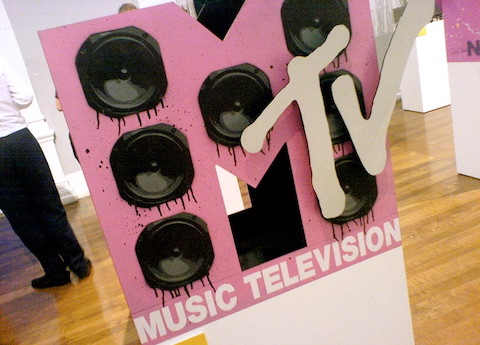
MTV stopped being Music Television a long time ago, but it made it official Dec. 31 as its remaining channels still dedicated to music videos (all in other countries) went off the air for good. (Photo by Garret Keogh / Flickr / CC BY-NC-SA 2.0 license)
Commentary, Russell Morse
To paraphrase Mark Twain, it turns out the reports of MTV’s death were greatly exaggerated. We have the internet and social media to thank for that hoax. We can also thank the internet and social media for MTV’s long, slow demise, because while the network technically still exists, it has not felt alive for quite some time.
The rumor that MTV was going to die spread so easily because it felt true. Not because the channel stopped broadcasting, but because it stopped mattering.
If I sound like a grouchy, old man mourning a long-irrelevant corporate pop culture machine, that’s because that’s exactly what I feel like.
I was born at the tail end of Gen X, and I embraced those ironic slacker values from the start. Nothing meant anything, and we were nihilist, hipster, anti-aesthetic young people for whom mild depression was a lifestyle.
We didn’t have much: The economy failed us; the boomers sucked the life out of our prospects and betrayed any faith in mankind or idealism or values. We were born in the shadow of Watergate and the dastardly transition of the hippies into cocaine-fueled, money-hungry monsters.
We believed nothing meant anything because, often, nothing did. Probably still doesn’t.
But we were united by popular culture, specifically the anti-corporate, corporate broadcasting of MTV.
I was 10 months old when MTV first went on the air at 12:01 a.m. Aug. 1, 1981, with a music video of the Buggles’ “Video Killed the Radio Star.” (Irony!) And I was 46 years old in December when I heard that MTV was finally, graciously, being laid to rest. To me it seemed like a mercy killing, the lone shot fired by Pa behind the barn, kindly killing a once great injured horse.
Instead, it was a handful of international MTV spinoff channels that signed off for good on Dec. 31. Unlike MTV proper, those stations had still lived up to their name, broadcasting music videos 24 hours a day right up until the last: “Video Killed the Radio Star,” of course.
I have a special insight into the workings and deterioration of MTV because I was a cast member on an MTV reality show in the early 2000s. “I’m From Rolling Stone” was a reality show about young journalists working at the Gray Lady of Rock and Roll for a summer, vying for a staff position at the magazine.
I quickly realized that being a good employee of Rolling Stone was in direct opposition to being a good subject of a reality show, so I “chose” to use my time on the show to perform a glorious manic spiral against the backdrop of rock star interviews and backstage passes.
My journalistic production was limited, and I didn’t get the job. I did, however, put on a show. (I told my mom not to watch, if that tells you the kind of fun I was having.)
It was an existential exercise, pitting who I was as a subject of a reality show (a “reality performer”) against my own, “real” personhood, and the lines quickly blurred. I was not in complete control and by the time the episodes aired, I could barely watch myself toggle between vague interest in the job and acting like a depraved lunatic, trying to emulate Hunter S. Thompson and in most ways, failing.
My template for this behavior was Puck, the star of “The Real World’s” third season in San Francisco, who used his screen time for a Gen X gross-out primal scream, leaving a lasting impression on my teenage self (and many other young men who never got the chance to engage in the experiment). I was Puck-like in many ways: annoying, outrageous, cringey and if I may say so myself, unforgettable. (For the brief time the show was on, anyway.) I loved it and I hated it, which is what most of us would say as viewers of the golden age of reality programming, which essentially started on MTV.
Many people blame reality programming for the beginning of the end of MTV and by the time “Jersey Shore” came along, it had become essentially irredeemable and we all longed for the return of the simpler days of music videos and MTV News. But the videos actually died with the advent of the internet and YouTube, where you could watch any music video you wanted at any time, without the filter of television programmers.
The other iconic reality show, and my personal favorite, was “Jackass,” where we got to watch irreverent young men crash golf carts into sand traps and sit in exploding porta potties. It was just what every teenage boy dreamed of, and it also had a lasting cultural impact, spawning three feature films and inspiring a tidal wave of internet daredevils. The internet killed the reality star. What else could MTV do but shrivel up?
What we really lost wasn’t MTV itself. It was shared popular culture.
Once we could watch whatever we wanted at any given time, we were sorted by the algorithm into micro tribes of interests until we each had our own siloed scrolls of 24-hour content.
So what am I mourning exactly? A corporate cable channel that gave me exactly what I wanted until I didn’t want it anymore? Sure. But that’s the prerogative of an aggrieved Gen Xer who didn’t believe in anything except music, cringey anti-heroes, and a bewildering 15 minutes of fame on the network that raised me.
One final note. You can now stream classic MTV content on Paramount Plus, where you can watch every episode of “The Real World,” “Jersey Shore” and “Beavis and Butt-Head.” No music videos, of course. And somehow, my own reality show remains unavailable. One of the few things left that you can’t find on the internet.



No Comments