


30 Jan San Pablo Considering Financing District to Increase Revenue
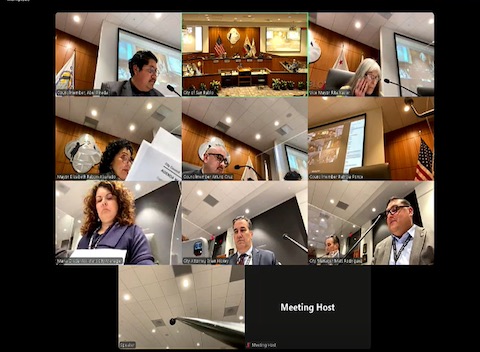
(Screenshot captured by Samantha Kennedy / The CC Pulse)
By Samantha Kennedy
The city of San Pablo wants to create a new special financing district that will capture a portion of property growth taxes for use on city projects, as it looks to expand revenue streams in the face of budget challenges.
City Council members on Monday unanimously gave staff the OK to move closer to implementing an Enhanced Infrastructure Financing District. The district would not create a new tax or increase any current tax.
“This tool allows the city to say, within this boundary, we define some piece of the future property tax dollars that is going to be set aside in a restricted fund,” said Joseph Dieguez, senior vice president with Kosmont Companies, which conducted the feasibility study on the financing district.
That funding would only be spent on eligible expenses. Potential uses of the funding include affordable housing, infrastructure, and artificial intelligence supportive technology, according to the feasibility study. Things like salaries cannot be paid using the funds.
Officials say the creation of the district would help the city meet its goals on diversifying revenue streams and creating a sustainable “economic sustainability plan for mitigating economic impacts” from projects threatening its main revenue generator, San Pablo Lytton Casino.
Last year, the city expected to have to come to terms with a budget deficit of $40 million over 10 years, and revenue from the San Pablo Lytton Casino is expected to drop in the same time.
Around 36 other EIFDs are in operation across the state, according to Dieguez; two of those — one in Brentwood and another in Pittsburg — are in Contra Costa County.
Boundaries for the EIFD are not certain, and can be expanded as the process continues, but the entire city is currently under consideration.
Officials would also explore partnering with the county, which would direct a portion of its property growth taxes into a fund for the eligible uses.
County officials don’t have to sign on, but San Pablo’s plan would have to cap the county’s contribution at equal to or less than the city’s contribution and support county goals like workforce development to align with the county’s policy.
The tool also makes the city “a magnet” for other dollars, said Dieguez. For example, the city would be more competitive when pursuing state grant opportunities because of how scoring rubrics evaluate cities.
Bringing in large amounts of money wouldn’t happen right away.
“It takes time to get there; these start small,” said Dieguez.
But before officials can see returns from the district, they still have to consider a resolution of intention for the EIFD — which county supervisors will also have to consider if partnering — and hold a public process on the creation and an Infrastructure Financing Plan.
Part of the process will include the creation of a Public Financing Authority to oversee the IFP.



No Comments