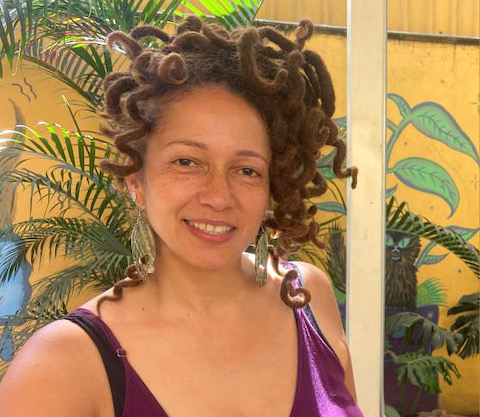
“The garden metaphor has really served me in my own grief experience,” said Andrea Sexton-Dumas. “We’re composting our feelings. We’re watching things bloom; we’re watching things die.”
By Zoe Meyer
Andrea Sexton-Dumas wakes many mornings to the sound of a familiar voice dulcetly singing: “Rise and shine and get out of bed, Andrea / I said, rise and shine, and get your butt out of bed for the Lord.”
It’s her mom, Bev.
But Bev died in 2003. And a decade before that, she had lost her ability to speak, let alone sing.
Now, in 2026, Bev’s voice often acts as Sexton-Dumas’ gentle morning alarm — and she still finds humor in her dutifully Catholic mom ordering her “butt out of bed for the Lord.”
Sexton-Dumas was born in West Oakland to two disabled parents, both diagnosed with multiple sclerosis. She was 8 when her dad, Mitchell, died from complications associated with the disease. Later that week, her Uncle Charles died.
Death and Sexton-Dumas became acquainted very early in her life.
At any age, death is impossible to comprehend. But at not even a decade old, it was a completely foreign concept.
“I didn’t know what grief was,” she said.
In her 20s, Sexton-Dumas was hit with a string of unbearable losses: At 22, her grandmother, Mother Dumas, died; at 24, her mom died; and at 26, her aunt, Ophelia, died.
“After seeing the life leave my mom’s body — for like a week or two — everywhere I went, everyone looked dead to me,” she said.
Sexton-Dumas recalled that around that time no one was naming or acknowledging grief. And without any means to process her pain, she moved to New York, numbing the ache with distance from home and alcohol. She believes that the first 26 years of her life, and the agony she experienced, was a byproduct of grief avoidance.
“When you become really close with death, you find ways to live better,” she said.
In 2007, she decided to do just that, returning to the Bay and moving in with her now-husband, Sean, completely revamping her life.
But in 2018, a close friend of hers she called “Dragonfly” died from cancer. During Dragonfly’s fight, Sexton-Dumas constructed her very first intentional altar to honor her–a tradition she’s carried forward. The altar consisted of a small spider plant clipping, a statue of Buddha to honor her friend’s Buddhist faith, and vibrant Mangaeon Calcite and Green Aventurine crystals.
Sexton-Dumas had the privilege of acting as her dear friend’s unofficial death doula during that time, supporting her throughout her diagnosis and battle with cancer.
Shortly before the COVID-19 pandemic, Sexton-Dumas rescued a Ridgeback Lab she named Churro — because he was “sweet and crunchy.”
During the pandemic, she was paralyzed by fear and dread and could barely eat. And on top of that, she was suffering from crippling endometriosis pain and ongoing infertility issues. Still, Churro needed to be walked every day, three times a day.
For the first few months of lockdown, Sexton-Dumas and Churro often basked side by side in the sun on her lawn and gazed at the tree overhead. A pair of great horned owls stared back at them, eyes wide and unblinking. Slowing down in this way helped Sexton-Dumas “attune to nature,” forging a stronger connection to her surroundings and herself.
Churro also helped Sexton-Dumas survive the loss of her niece, Nayeli, later in 2020. Nayeli used to sing “Baby Got Back” by Sir Mix-a-Lot in the style of Kiss, belting the lyrics in a hard-rock rendition, Sexton-Dumas said.
Having spent most of her life by her loved ones’ bedsides, this was a natural progression in her life.
“The work is new, but the experience is not,” Sexton-Dumas said.
After Churro died in 2024, shattering her, Sexton-Dumas began working with a hospice patient whom she worked with for two years up until she died late this January.
“Churro prepared me for my hospice patient,” she said. “I feel like he prepared me for the rest of my life.”
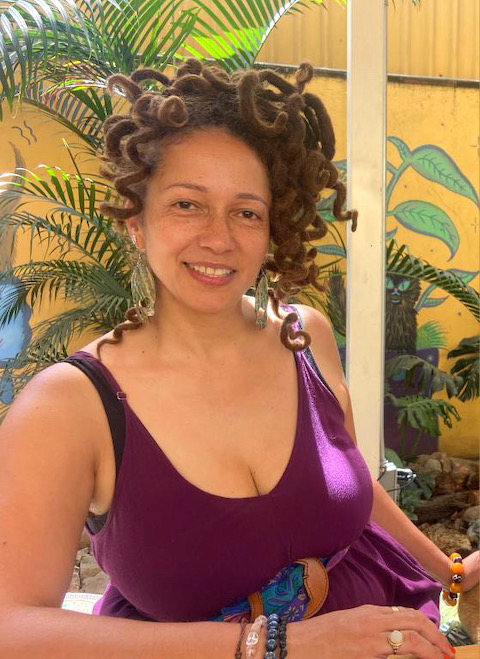
Now 47, and having endured a tremendous amount of loss, Sexton-Dumas refers to grief as a friend of hers. In fact, she and grief “hang so tough” that she found her calling in supporting others through loss. She refers to herself as a death and grief doula, grief gardener, and spiritual companion.
“The garden metaphor has really served me in my own grief experience,” Sexton-Dumas said. “We’re composting our feelings. We’re watching things bloom; we’re watching things die.”
A core part of Sexton-Dumas’ philosophy is allowing grief in and embracing it — living alongside it while channeling it to find deeper meaning in life.
“I’ve had friends tell me, ‘I won’t ever recover.’ Well, maybe you shouldn’t,” Sexton-Dumas said. “You will stop crying one day. I promise that will happen. But what would happen if you let grief change you?”
Death, she believes, is a possibility for all of us at any moment. A reality Sexton-Dumas uses as an opportunity to attack life, full-throttle.
She sees this idea of death awareness as particularly important during these perilous times in our country. “If you are really going to fight this administration, then babe, you gotta get comfortable with death,” she said. “Cause it might just cost you your life.”
Looking ahead, Sexton-Dumas hopes to “serve people in having a soulful death.”
In the meantime, she’ll continue tending to her “illegal” daffodils out front, planted against HOA guidelines as a grief ritual. They are blooming and alive, marking the end of the dark days of winter and the continuing of life, grief and all.
I Hope This Día de Muertos Will Bring Me Closure Celebrating the long and beautiful life that my grandmother had by creating an altar and providing offerings for her can allow me to let go of the pain.
What a beautiful story. Thanks for capturing this so well.
Sim G.
Posted at 16:13h, 11 February
Such a beautiful story, captured so well. 💜
Anonymous
Posted at 19:43h, 11 February
Beautifully written story about a remarkable person
Breezy Cooper
Posted at 08:02h, 12 February
a beautiful story indeed
Anonymous
Posted at 09:03h, 12 February
Grief Gardener…connecting with the perceptively hard parts of life and making it beautiful and cherished. Well said and well written!
Lindsey H.
Posted at 09:55h, 12 February
I want to print this out and read it every night. Thank you does not express how this has impacted me. Feeling so so seen. ✨️💜
Lindsey H.
Posted at 09:56h, 12 February
I want to print this out and read it every night. Thank you does not express how this has impacted me. Feeling so so seen. ✨️💜
Yvette perez
Posted at 20:41h, 12 February
I felt so connected with her story. Thank you so much for such an amazing story.
Post A Comment
Enjoy our content? SIGN UP FOR OUR NEWSLETTER
We use cookies on our website to give you the most relevant experience by remembering your preferences and repeat visits. By clicking “Accept”, you consent to the use of ALL the cookies.
This website uses cookies to improve your experience while you navigate through the website. Out of these, the cookies that are categorized as necessary are stored on your browser as they are essential for the working of basic functionalities of the website. We also use third-party cookies that help us analyze and understand how you use this website. These cookies will be stored in your browser only with your consent. You also have the option to opt-out of these cookies. But opting out of some of these cookies may affect your browsing experience.
Necessary cookies are absolutely essential for the website to function properly. These cookies ensure basic functionalities and security features of the website, anonymously.
Cookie
Duration
Description
cookielawinfo-checbox-analytics
11 months
This cookie is set by GDPR Cookie Consent plugin. The cookie is used to store the user consent for the cookies in the category "Analytics".
cookielawinfo-checbox-functional
11 months
The cookie is set by GDPR cookie consent to record the user consent for the cookies in the category "Functional".
cookielawinfo-checbox-others
11 months
This cookie is set by GDPR Cookie Consent plugin. The cookie is used to store the user consent for the cookies in the category "Other.
cookielawinfo-checkbox-necessary
11 months
This cookie is set by GDPR Cookie Consent plugin. The cookies is used to store the user consent for the cookies in the category "Necessary".
cookielawinfo-checkbox-performance
11 months
This cookie is set by GDPR Cookie Consent plugin. The cookie is used to store the user consent for the cookies in the category "Performance".
viewed_cookie_policy
11 months
The cookie is set by the GDPR Cookie Consent plugin and is used to store whether or not user has consented to the use of cookies. It does not store any personal data.
Functional cookies help to perform certain functionalities like sharing the content of the website on social media platforms, collect feedbacks, and other third-party features.
Performance cookies are used to understand and analyze the key performance indexes of the website which helps in delivering a better user experience for the visitors.
Analytical cookies are used to understand how visitors interact with the website. These cookies help provide information on metrics the number of visitors, bounce rate, traffic source, etc.
Advertisement cookies are used to provide visitors with relevant ads and marketing campaigns. These cookies track visitors across websites and collect information to provide customized ads.






Anonymous
Posted at 19:19h, 10 FebruaryWhat a beautiful story. Thanks for capturing this so well.
Sim G.
Posted at 16:13h, 11 FebruarySuch a beautiful story, captured so well. 💜
Anonymous
Posted at 19:43h, 11 FebruaryBeautifully written story about a remarkable person
Breezy Cooper
Posted at 08:02h, 12 Februarya beautiful story indeed
Anonymous
Posted at 09:03h, 12 FebruaryGrief Gardener…connecting with the perceptively hard parts of life and making it beautiful and cherished. Well said and well written!
Lindsey H.
Posted at 09:55h, 12 FebruaryI want to print this out and read it every night. Thank you does not express how this has impacted me. Feeling so so seen. ✨️💜
Lindsey H.
Posted at 09:56h, 12 FebruaryI want to print this out and read it every night. Thank you does not express how this has impacted me. Feeling so so seen. ✨️💜
Yvette perez
Posted at 20:41h, 12 FebruaryI felt so connected with her story. Thank you so much for such an amazing story.