
01 Mar BART Approves Cutting Service, Raising Fares if Tax Doesn’t Pass
BART has previously said it could close its East County stations, like the Pittsburg/Bay Point one, if a sales tax ballot measure doesn’t pass to help it reduce its budget deficit. Its current plan involves reducing service but not closing situations. (Samantha Kennedy / The CC Pulse)
By Samantha Kennedy
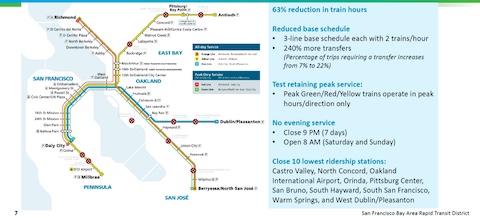
If a tax on the November ballot doesn’t pass to help fill the agency’s deficit of between $350 million and $400 million, BART will run regular service on only three lines and raise fares by 30% starting in January 2027, before shutting down any stations.
BART’s Board of Directors voted 8-1 Thursday to approve an alternative service plan if the agency doesn’t receive additional funding by the next fiscal year. The first part of the plan would reduce the Red and Green lines to “limited peak service in only the peak commute direction,” according to a press release. Across the system, it would also close service at 9 p.m. each night, and run a train on each line every 30 minutes.
If more cuts need to be made, BART would implement the second phase. That could close stations and push fare increases to 50%. While not explicitly named as they had been in an earlier version, BART previously identified the East Contra Costa stations of Antioch, Pittsburg/Bay Point and Pittsburg Center as contenders for closure.
The plan doesn’t change current service, so stations will continue to operate, and fares will remain the same, for now.
“It’s a necessary step we need to take to plan for our future — hopefully a future we will not necessarily have to deal with,” said director Mark Foley, who represents stations in East Contra Costa.
The system’s deficit is due to declining ridership since the height of the COVID-19 pandemic. Ridership, despite gains thanks to returning riders and events, is still down by 50% in comparison with pre-pandemic levels, according to BART.
Gov. Gavin Newsom authorized a $590 million loan to the Metropolitan Transportation Commission that holds off cuts to BART, AC Transit, Muni and other Bay Area transit systems.
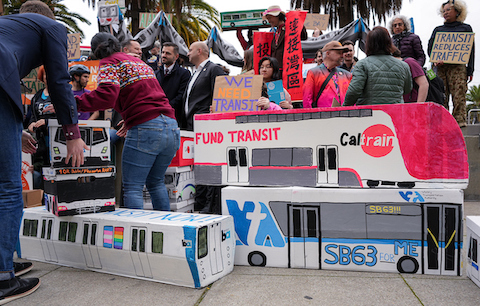
But BART says the transit agency won’t use the loan if a 14-year regional sales tax, dubbed “Connect Bay Area,” doesn’t pass in November. The measure will ask voters if they want to approve a sales tax increase of half a cent in Alameda, Contra Costa, San Mateo and Santa Clara counties and one cent in San Francisco.
Pittsburg Mayor Dionne Adams and Antioch Mayor Ron Bernal have previously spoken out against the stations in their cities being potentially closed. Adams said that it would disconnect communities from the rest of the Bay Area.
If stations in Pittsburg and Antioch were to close, the closest BART station would be in Concord.
But the sales tax measure is not certain to pass.
Riders have shared frustrations about delayed trains and other service outages that have happened in recent weeks. BART had more than 35,000 delays in the last year, according to the San Francisco Standard.
Some urge voters not to approve the tax because of BART’s “scare tactics.”
If BART doesn’t receive any additional funding and cuts in the first two phases don’t work, there is a third plan: The agency would stop service altogether.

No Comments